SOC compliance provides organizations that offer services to other companies with the assurance that they can adequately manage and protect sensitive customer data. By conducting a SOC 2 readiness assessment, companies can evaluate their security policies and procedures against the SOC 2 framework.
Two main types of SOC compliance audits result in a SOC report: SOC 1 and SOC 2. SOC 1 audits apply to organizations that handle financial data, while SOC 2 focuses on cybersecurity controls and vendor risk management. A successful SOC 2 audit assures clients that an organization has strong controls to secure their sensitive data.
What is SOC Compliance?
A business that provides services to other companies — say, data storage or payroll management — typically needs to assure those customers that the business won’t expose them to undue security vulnerabilities or compliance risks. The two most common ways to provide that assurance are to pass a SOC 1 or SOC 2 audit.
A SOC 1 audit (the acronym for “Service Organization Control”) pertains to businesses that handle customer financial data; the audit seeks to ensure that the company can adequately manage and protect the financial information in its custody. A SOC 2 audit, in contrast, focuses on cybersecurity controls and vendor risk management. Both SOC audits were developed by the Auditing Standards Board of the American Institute of CPAs (AICPA).
SOC 2 reports are “Reporting on Controls at a Service Organization Relevant to Security, Availability, Processing Integrity, Confidentiality, or Privacy.” Those five issues are also called the five trust services criteria or principles.
SOC 2 audits also come in two types—type I assesses whether the relevant controls are appropriately designed at a specific time. Type II then assesses whether those controls work effectively over a defined period.



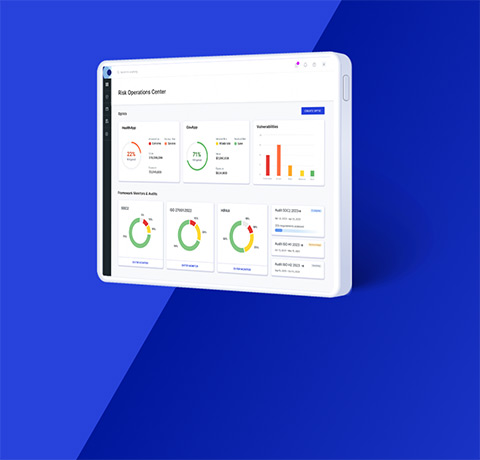
 User-friendly dashboard with real-time metrics on prioritized risks